
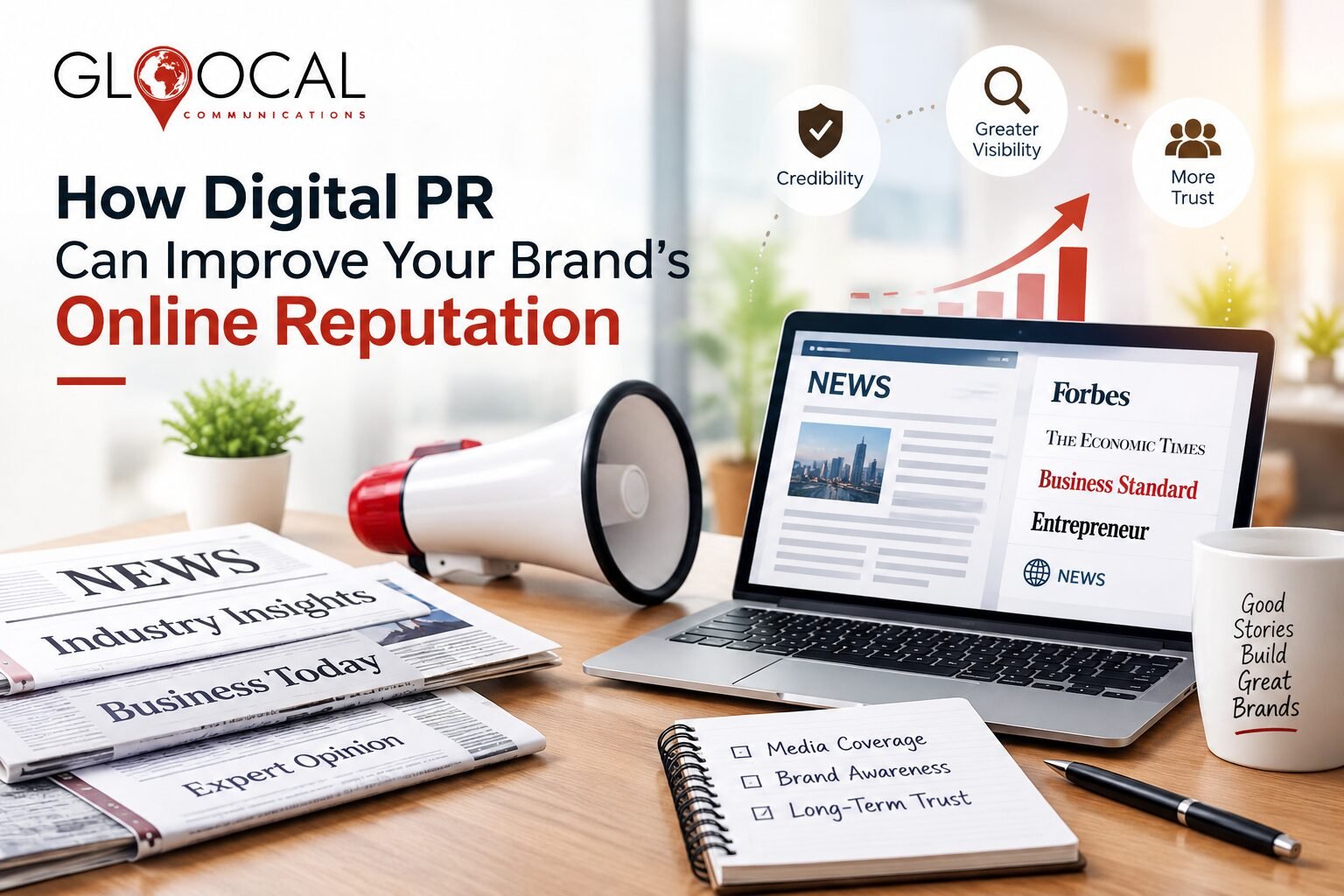
How Digital PR Can Improve Your Brand’s Online Reputation
Picture a buyer who has just heard about a new company. The first thing that buyer does is search the name. A few news mentions, an expert quote, and a feature in an industry blog make the brand feel safe. An empty page, or one bad review sitting at the top, makes the buyer hesitate.
That first impression is exactly what digital PR shapes. It gets a brand talked about by sources people already trust, and over time those mentions build the reputation. For growing businesses, online PR for businesses is no longer optional. It is one of the simplest ways to earn trust before the first sales call.
What Digital PR Means for Online Reputation
Digital PR is the practice of earning attention through news sites, blogs, industry portals, and other trusted online platforms. The brand does not pay for that space. It earns it by sharing something worth publishing.
Online reputation management is often treated as damage control, like replying to bad reviews or pushing down negative links. That is only half the job. The better half is building enough credible content that people judge a brand by the full picture, and not by one complaint.
How Digital PR Works
How digital PR works is simpler than most people think. A brand first finds a story with real value. It could be a launch, an expert opinion on a changing trend, a helpful guide, or a community effort. That story is shaped for a specific publication and shared with the right journalist. If the journalist sees value, it gets published.
Each mention then works like a recommendation from someone else. Readers trust that far more than anything a brand says about itself.
Benefits of Digital PR That Go Beyond Visibility
The benefits of digital PR show up in more places than most businesses expect.
First, there is credibility. A mention in a respected publication tells readers that an independent source found the brand worth writing about.
Second, there is search presence. When trusted websites mention a brand, search results slowly fill with more positive and relevant pages. That is why many marketers use PR for brand awareness alongside SEO and content.
Third, there is balance. Steady, positive coverage makes it harder for one negative post to define the brand. Among all the digital PR benefits, this one matters most in a crisis, because readers can already see a track record.
Brand visibility through PR also reaches people that ads often miss. A reader who finds a brand inside a story, and not inside an advertisement, usually approaches it with more openness. That is how a business can improve brand visibility in a way that feels earned.
Ways to Get Media Coverage Without a Big Budget
Many business owners ask how to get media coverage when they have no press contacts. The honest answer is preparation and patience. A few ways to get media coverage work for almost any brand.
Expert commentary is the easiest place to start. Journalists often need a quick, informed opinion on a trending topic. A founder or senior team member who explains an industry change in plain words quickly becomes a useful source.
Original insight helps too. Observations from real customer conversations or daily work can help a brand earn media coverage, as long as every claim can be backed up.
Timely news moments also open doors. A product launch, an award, a new leadership role, or a community project can lead to online media coverage when the angle is clear.
To keep all this organised, a media coverage strategy helps. It lists the main messages, target publications, spokespeople, and a simple calendar. Without it, outreach turns random, and random outreach rarely leads to business media coverage that lasts.
Journalist Outreach and Media Pitching That Gets Replies
Journalist outreach is not about sending one email to a hundred inboxes. Good media pitching is short, specific, and respectful of the reporter’s time.
Here is a simple example. A pitch that says “New service launched, please cover” gives a journalist no reason to reply. A pitch that says “Rising rents are making first-time buyers rethink timing, and a local financial advisor sees this pattern every week” gives the reporter a story, a source, and a reason to care. The first talks about the brand. The second talks about the reader.
A few habits help. Read the journalist’s recent work first. Lead with the angle. Keep the note brief. Offer a spokesperson or an example. Follow up once, politely, and move on if there is no interest. A steady media relations strategy treats journalists as long-term contacts, and that trust grows the same way customer trust does.
Press Release Distribution Done Right
A press release still has value when the news is real. A new partnership, an expansion, or a major launch deserves a clear online press release. Press release distribution then helps that news reach editors and industry sites.
The release should read like a short news story. One strong headline, one clear message, and one quote that sounds like a real person will do more than pages of corporate language.
Why an Earned Media Strategy Builds Lasting Trust
Paid ads and owned content are useful, but the brand controls both. An earned media strategy is different. Editors decide whether a story deserves space, and that decision gives the coverage its weight.
Earned media for brands also builds on itself. One good article can lead to a podcast invitation, a quote in another story, or a share from an industry voice. Slowly, brand mentions online appear across many sources, and both readers and search engines notice the pattern.
Thought leadership supports this. Brands that share clear, honest views on their industry become the names journalists remember. Transparent communication protects that standing. Quick answers, honest corrections, and open updates during a problem do far more for reputation than silence.
PR Strategy for Small Businesses
A PR strategy for small businesses does not need a big team. It needs focus. Two or three core messages are enough to begin. A short list of relevant publications, such as local business media and industry blogs, works better than chasing national outlets on day one. One confident spokesperson is enough, and one good pitch every week beats a burst of activity followed by months of silence.
Small brands also have an edge. Founders can share personal stories and direct experience that large corporations often struggle to match. That human voice is exactly what many journalists look for.
How to Measure Digital PR Results
Reputation feels hard to measure, but a few indicators make progress easy to see:
- Quality media mentions: relevance and authority matter more than the number of articles.
- Referral traffic: visits that come from published coverage show real reader interest.
- Brand search visibility: more people searching the brand name often points to stronger awareness.
- Backlinks: links from trusted websites support search performance.
- Audience engagement: shares, comments, and inquiries show how the coverage landed.
Checking these every month or quarter shows which stories earn attention and where the approach needs a change. It also helps sales and marketing teams see how PR connects to leads.
Choosing a Digital PR Agency
Some businesses handle early outreach on their own. Others reach a point where time, contacts, or experience become the limit. A digital PR agency brings media relationships, story development skills, and a tested process, which can save months of trial and error.
Gloocal Communications works as a PR agency for businesses that want credible visibility instead of noise. Its digital PR services cover media relations, journalist outreach, press release distribution, and story-led communication planned around each brand’s goals. The focus stays on steady, trustworthy coverage, and not on shortcuts that fade quickly.
Frequently Asked Questions
What is digital PR in simple words?
Digital PR is the practice of earning mentions for a brand on trusted online platforms such as news sites, blogs, and industry portals. The aim is to build credibility, visibility, and a positive reputation.
How is digital PR different from traditional PR?
Traditional PR leans on print, radio, and television. Digital PR focuses on online publications, where coverage can also support search visibility, backlinks, and referral traffic.
How long does digital PR take to show results?
It depends on the industry, the quality of the stories, and how consistent the outreach is. Reputation is built through repeated, credible mentions, so steady effort over several months usually matters more than one big push.
Can small businesses use digital PR?
Yes. A focused plan with clear messages, a few relevant publications, and one reliable spokesperson is enough to start. Small brands often have strong founder stories that journalists enjoy.
Does digital PR help with negative online content?
It can help balance the picture. When credible, positive coverage builds up over time, a single negative mention carries less weight. Honest and prompt communication also helps protect trust.
Final Thoughts
A strong online reputation is built through credible voices, consistent communication, and stories that deserve attention. A thoughtful digital PR strategy helps a brand earn trust, stay visible, and stay prepared when questions or criticism come up.
Digital PR for businesses is not a one-time campaign. It is a habit of showing up honestly, again and again, in places that matter.
Businesses ready to strengthen their reputation can explore the PR services at Gloocal Communications and discuss their brand communication goals with the team. One conversation can show where media coverage for businesses can start working for the brand.