A
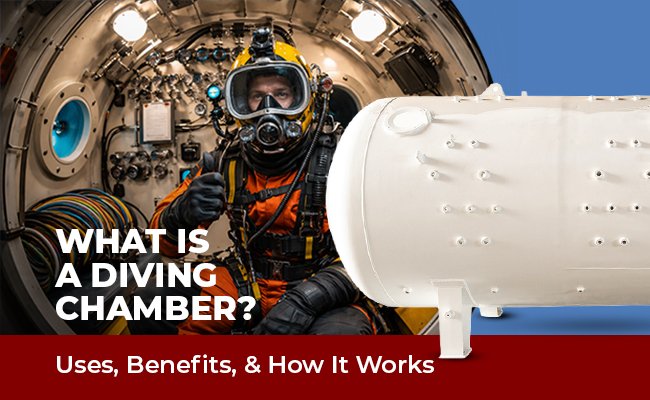
Diving Chamber is a specially engineered pressure vessel designed to control and manage pressure changes experienced by divers during underwater operations. In offshore, subsea, and marine industries, pressure control is directly linked to human safety and project success.
When a diver descends underwater, surrounding pressure increases rapidly. The human body absorbs gases under this pressure. If the diver returns to the surface too quickly, those gases can form bubbles inside the body. A Diving Chamber ensures that pressure is reduced gradually and safely, allowing the body to adjust in a controlled manner.
Also known as an
Air Decompression Chamber ,
Air Pressure Chamber, Dive Decompression Chamber, or Recompression Chamber , this system is a mandatory safety component in commercial diving operations. In high-risk offshore environments, it serves as a critical life-support system rather than optional equipment.
What Is a Diving Chamber
A
Diving Chamber is a sealed, high-strength steel enclosure built to withstand internal pressures equal to or greater than deep-sea conditions. It is designed to simulate underwater pressure and manage safe decompression after diving operations.
Its primary purpose is to prevent decompression sickness by controlling the rate at which pressure changes occur. Instead of immediate exposure to surface pressure, divers remain inside the chamber where decompression takes place in carefully timed stages.
In offshore engineering, systems such as
Diving Chamber RCC and Air Decompression Chamber RCC are used for both scheduled decompression and emergency recompression treatment. A properly designed
Recompression Chamber (RCC) allows operators to respond immediately if a diver shows symptoms related to pressure imbalance.
These systems are essential for subsea installation, inspection, maintenance, and repair operations.
Types of Diving Chambers
Air Decompression Chamber
An
Air Decompression Chamber is installed on offshore platforms and diving support vessels. It is used after underwater tasks to normalize a diver’s internal body pressure in a controlled environment.
This type of Diving Chamber is vital in commercial diving where multiple dives are performed daily. It ensures:
- Safe pressure reduction
- Immediate response to decompression-related symptoms
- Continuous diver protection during offshore campaigns
Its presence significantly reduces operational risk and enhances overall safety management.
Air Pressure Chamber
An
Air Pressure Chamber is used to simulate underwater pressure conditions without actual immersion.
It is commonly applied for:
- Diver training programs
- Pressure testing of subsea tools
- Testing valves, pipelines, and underwater components
- Qualification of equipment before offshore deployment
By replicating depth conditions in a controlled setting, the Air Pressure Chamber improves reliability and prevents equipment failure during live operations.
Saturation Diving Chamber Systems
Saturation Diving Chamber systems are designed for deep-water and long-duration projects. In these operations, divers live inside a pressurized habitat for days or weeks.
Instead of decompressing after every dive, divers remain under constant pressure and are transported to the underwater worksite using a transfer system. Decompression is performed only once, at the end of the assignment.
This method:
- Reduces repeated decompression cycles
- Improves productivity in deep-water projects
- Minimizes overall project timelines
- Enhances diver safety during complex subsea operations
Such advanced Diving Chamber systems are widely used in offshore oil and gas and large marine infrastructure projects.
How Does a Diving Chamber Work
A Diving Chamber operates through three primary stages of pressure control.
Pressurization Phase
Pressure inside the chamber increases gradually to match the required depth level. This stage is carefully monitored to ensure comfort and stability for divers.
Stabilization Phase
Once target pressure is reached, internal conditions are maintained. Oxygen supply, humidity, temperature, and carbon dioxide levels are regulated using environmental control systems.
Controlled Decompression Phase
Pressure is reduced slowly in planned intervals. This allows dissolved gases in the body to exit naturally without forming harmful bubbles.
Modern Diving Chamber and Air Pressure Chamber systems include:
- Digital monitoring consoles
- Real-time pressure gauges
- Emergency shutdown systems
- Alarm and safety interlocks
- Backup power supply
These features ensure accurate pressure management and continuous supervision throughout the operation.
Major Uses of a Diving Chamber
A Diving Chamber plays a central role in multiple industrial applications.
Offshore Oil and Gas Operations
Used after underwater welding, pipeline inspection, maintenance, and installation work to safely restore normal pressure levels.
Commercial Diving Projects
Provides emergency decompression support and medical-grade recompression treatment when required.
Subsea Construction and Marine Infrastructure
Supports construction of ports, bridges, offshore wind farms, and underwater foundations.
Equipment Testing and Validation
Air Pressure Chambers are used to test subsea components under simulated depth conditions, ensuring durability and performance reliability.
The use of an Air Decompression Chamber ensures project continuity and minimizes unexpected delays.
Benefits of Using an Air Decompression Chamber
An
Air Decompression Chamber provides measurable operational advantages:
- Prevents decompression sickness and related complications
- Strengthens offshore safety protocols
- Reduces project interruptions caused by health emergencies
- Supports compliance with marine and offshore regulations
- Improves efficiency in deep and repeated diving operations
- Enhances long-term project reliability
A properly engineered
Recompression Chamber RCC directly contributes to safer work environments and stable offshore execution.
Key Components of a Modern Diving Chamber System
A modern Diving Chamber system consists of several integrated safety and control elements.
Pressure Vessel Structure
Heavy-duty steel construction designed to endure repeated high-pressure cycles.
Main Lock and Entry Lock
Separate compartments for diver entry and equipment transfer without disturbing internal pressure.
Gas Supply System
Provides compressed air or mixed breathing gases.
Environmental Control System
Maintains stable temperature and humidity conditions.
Carbon Dioxide Scrubbing Unit
Removes excess CO2 to maintain breathable air quality.
Monitoring Console
Displays internal pressure, oxygen concentration, and environmental data.
Safety Relief Valves
Automatically release excess pressure if limits are exceeded.
Communication System
Ensures uninterrupted communication between divers and surface control teams.
Each component of the Diving Chamber and Air Pressure Chamber works together to ensure operational stability and safety.
Safety Standards and Compliance
Industrial Diving Chambers must comply with recognized international pressure vessel standards and offshore safety regulations.
Key compliance practices include:
- Hydrostatic pressure testing
- Routine inspection and certification
- Trained and certified chamber operators
- Backup systems for power and communication
- Detailed operational logs and documentation
A certified
Air Decompression Chamber or
Recompression Chamber RCC demonstrates adherence to strict engineering and safety protocols required in offshore environments.
Why Choose J. K. Subsea Engineering Pvt. Ltd. for Diving Chamber Solutions
With over 23 years of experience in subsea and offshore engineering, J. K. Subsea Engineering Pvt. Ltd. delivers reliable and project-specific Diving Chamber systems.
The company offers:
- Custom-engineered Diving Chamber solutions
- High-quality Air Decompression Chamber and Air Pressure Chamber systems
- Certified fabrication and rigorous testing
- Complete quality assurance processes
- Installation assistance and long-term technical support
- Maintenance and inspection guidance
A strong focus on diver safety, structural integrity, and operational efficiency ensures dependable performance in demanding offshore conditions.
Conclusion
A Diving Chamber is an essential safety and operational system in offshore and subsea industries. It protects divers from pressure-related risks, improves project efficiency, and ensures regulatory compliance.
Whether functioning as an Air Decompression Chamber, Air Pressure Chamber, or Recompression Chamber, its role in safeguarding human life and maintaining project continuity is critical.
By combining engineering precision with proven offshore experience, J. K. Subsea Engineering Pvt. Ltd. provides dependable Diving Chamber solutions built for performance, durability, and safety.