

June 26, 2026
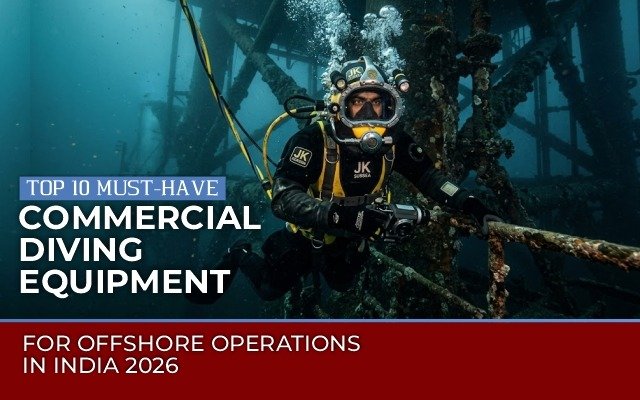
For any offshore surface-supplied diving operation, the minimum required equipment includes a Containerized Air Decompression chamber, Diving Air Panel, LARS system, Diving Machinery Container, Hydraulic Power Pack, 4 core Diver Umbilical, Commercial diving helmet, CO2 Scrubber, Cylinder quad, Diver communication system,. All equipment must meet IMCA D018, D023 and D040 standards before any diver enters the water.
Running a safe offshore diving spread in India means getting the equipment right before mobilisation, not during it. This is not a checklist for recreational diving. Commercial diving at 30 to 50 metres in Indian offshore waters, whether for ONGC pipeline inspection, subsea infrastructure maintenance, or port construction, carries real risk. The equipment either works to spec or the operation does not happen.
This blog covers each of the 10 essential pieces of equipment, what they do, why they matter for diver safety, and what certifications to look for when sourcing in India.
What is it?
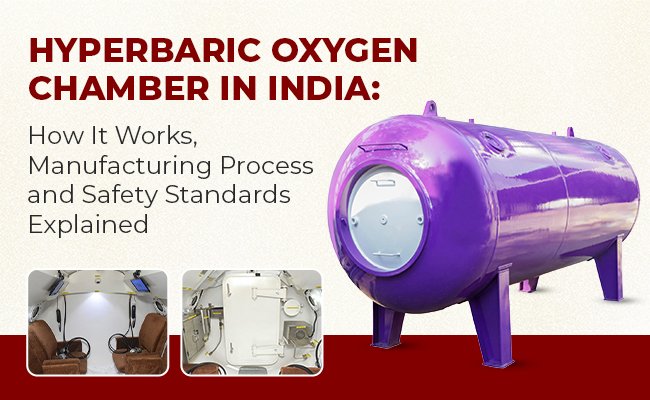
A Recompression Chamber, also called a deck Air Decompression Chamber (ADC) or Dive Decompression Chamber (DDC), is a pressure vessel used to treat Decompression Sickness on site. It is the single non-negotiable piece of equipment for any surface-supplied offshore diving operation.
IMCA D023 is direct on this: no surface-supplied diving operation should proceed unless a two-compartment chamber is present at the worksite. There are no exceptions written into that standard.
Decompression sickness can develop within minutes of a diver surfacing. Getting a diver to a hospital-based hyperbaric unit in Indian offshore waters can take hours. An on-site containerized chamber changes that timeline completely and has saved divers’ lives in situations where shore-based treatment would have come too late
What certifications to look for
Containerised DDC units are standard for offshore barge and vessel operations because they mobilise quickly and integrate directly with the life support panel. When sourcing a Decompression chamber manufacturer in India, ask for the full Documentation package, not just the chamber itself.
What is it?
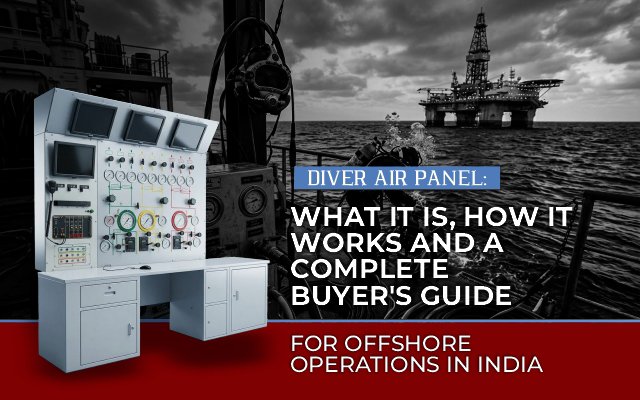
The Diving Air Panel, or life support panel, is the control panel where the diving supervisor manages Breathing Air supply to every diver in the water. It sits at the centre of the Dive Control Station. Everything the supervisor does during a dive runs through this Air panel
A surface air diving panel for offshore operations needs to handle at least two working divers and a standby diver (3 Diver) simultaneously or three working diver and a standby diver (4 Diver). It monitors gas pressure in real time, allows the supervisor to isolate or switch gas supply instantly, and triggers audible alarms if pressure drops below safe levels. If the panel is confusingly labelled, poorly built, or not pressure-tested, mistakes happen under pressure, literally.
What certifications to look for
Sourcing from a certified diver air panel supplier in India gives you faster lead times and accessible after-sales support compared to importing from Europe or the US.
What is it?
A Launch And Recovery System is the mechanical structure that gets the diver safely from the vessel deck into the water and back out again. In calm water at an inshore jetty, the risk is manageable. In open offshore conditions with vessel motion and surface current, an uncontrolled diver entry can result in serious injury before the diver even gets to depth.
A properly rated LARS gives the supervisor physical control over the diver’s descent and recovery at all times. The diver basket holds the diver steady at the surface, the winch controls the rate of descent, and the guide weight reduces the effect of vessel motion on the umbilical and diver during water entry. Without it, diver entry and recovery becomes the most dangerous part of the operation.
What a standard offshore LARS includes
What certifications to look for
For India-based projects, working with a LARS manufacturer in India avoids long import lead times and simplifies customs clearance. Compact LARS units designed to fit in a 20-foot container are popular for barge operations where deck space is limited.
What is it?
The Hydraulic Power Pack supplies pressurised hydraulic fluid to the LARS winches and other hydraulically operated equipments or tools on the diving spread. When the diver is in the water and needs to be recovered, the HPU is what makes that possible.
A hydraulic failure mid-recovery, with a diver suspended on the line in rough seas, is one of the more serious equipment failure scenarios in surface diving. HPUs for offshore diving need to be rated for continuous duty, not intermittent duty. They also need manual override capability so recovery can continue even if the primary power system develops a fault.
What to look for
What is it?
The umbilical is the physical connection between the diver and the surface. A 4 Core Diving Umbilical bundles four components into one reinforced assembly: a Breathing Air Hose, a Communications Cable, a Pneumofathometer hose for depth monitoring, and a CCTV Cable
If the umbilical fails, the diver is on bailout. The Breathing gas supply, communications, CCTV and depth monitoring all run through this single assembly. A degraded hose, a weak outer sheath that cuts on a subsea structure, or a poorly terminated connector can cause any or all of those systems to fail simultaneously.
What to check when sourcing
What is it?
The Kirby Morgan Band Mask series, commonly called the KMB helmet, is the industry standard for surface-supplied commercial diving. The KMB 18, KMB 28, and similar models are specified on most offshore diving contracts in India. The helmet provides breathing gas supply, a demand regulator, free-flow capability, integrated communications, and head and face protection in one assembly with underwater light and underwater camera mounting frame mounted on the helment
This is the diver’s primary life support interface. The regulator inside the helmet controls how the diver breathes. A regulator that has not been serviced at the correct intervals, or one with counterfeit internal components, is not a minor maintenance issue. It is a direct risk to the diver’s life
What to look for
What is it?
A CO2 scrubber removes carbon dioxide from exhaled breathing gas in chamber life support applications. During a Decompression Treatment inside the chamber, the scrubber maintains Breathable Air Quality for the occupant throughout what can be a several-hour treatment table.
Carbon dioxide buildup inside a chamber is dangerous partly because it can incapacitate an occupant before they clearly recognise the symptoms. Running a scrubber beyond its rated capacity or using degraded CO2 absorbent material removes the safety margin entirely. This is an area where cutting corners is genuinely invisible right up until it is not.
What to check
What is it?
A cylinder quad is a frame holding four or more high-pressure gas cylinders connected through a common manifold. On a commercial diving spread, cylinder quads store surface supply breathing air, emergency bailout gas, and chamber gas supply in a compact, crane-liftable format.
Gas supply continuity is not negotiable during a dive. Cylinder quads provide organised, accessible gas storage that can be isolated, connected, or swapped without disrupting the supply to the divers in the water. A poorly assembled quad with out-of-date cylinder test certificates is also a deck safety risk, especially during offshore crane handling.
What to look for
When looking for a cylinder quad supplier in India, confirm the PESO test documentation on every cylinder individually.
What is it?
A diver communication system connects the supervisor at the surface to the working diver through the umbilical. It typically includes a surface control unit at the dive console and an integrated transceiver inside the diver’s helmet.
IMCA D023 requires the diving supervisor to have direct communication with any diver in the water at all times during the dive. Loss of communications is a significant event. On most operations, loss of comms triggers an immediate ascent procedure.
For multi-diver operations, the system needs to address the working diver, the standby diver, and the surface team independently. Systems with built-in audio recording are increasingly specified by offshore operators because the recording serves as both an operational log and evidence in any incident review.
If your current setup is basic audio-only with no recording capability, check whether your project operator’s requirements demand something more. Some ONGC and international PSC contracts now specify audio recording as standard.
What is it?
The Diving Machinery Container, sometimes called the machinery room container, is the weatherproof unit that houses the, compressor gas banks, communications system, gas monitoring instruments, and diving supervisor’s workstation. Everything above comes together and gets operated from inside this container.
Offshore conditions in Indian waters, particularly during monsoon season in the Arabian Sea or Bay of Bengal, are not forgiving to equipment left exposed on deck. The container protects the critical control equipment, gives the supervisor a stable working environment, and allows the entire diving spread to be mobilised and demobilised as a single certified lift rather than as individual loose items.
For ONGC platform operations or PSC block projects where vessel time is charged by the day, the ability to move the whole spread in one lift makes a real difference to the project schedule.
What to look for
Most offshore diving equipment used in India today is either imported from UK or the US, or sourced from a small number of Indian manufacturers and suppliers. Working with an Indian supplier has straightforward advantages: shorter lead times, no customs delays, easier access to spares, and support teams who understand the practical realities of Indian offshore operations.
J.K. Subsea Engineering Pvt Ltd manufactures and supplies certified commercial diving equipment for offshore operations in India. Their range covers decompression chambers, diver air panels, LARS systems, hydraulic power packs, umbilicals, and complete diving spread packages, all built to IMCA standards with full certification documentation.
If you are planning an offshore mobilisation or procuring equipment for a new diving spread, contact J.K. Subsea Engineering with your project specifications and they will advise on the right equipment configuration for your operation.
| Equipment | Standard / Certification |
|---|---|
| Dive Decompression Chamber | IMCA D018, D023, DNV, IRS, ABS, LR and BV |
| Diver Air Panel / Life Support Panel | IMCA D023, Pressure Test Certificate |
| LARS System | IMCA D018, D023, DNV, IRS, ABS, LR and BV |
| Hydraulic Power Pack | Class Society Certification, Continuous Duty Rated |
| 4 Core Diver Umbilical | Individual Core Pressure Test Records |
| Diving Helmet | Manufacturer Service Record, Authorised Parts |
| CO₂ Scrubber | CO₂ Analyser with Alarm, Rated Cartridges |
| Cylinder Quad | PESO Cylinder Test Certificates, Lift Certificate |
| Diver Communication System | IMCA D023, Audio Recording Where Specified |
| Dive Control Container | DNV 2.7-1 Offshore Container Certification |
Fill in your details below to instantly download the product datasheet.