

June 26, 2026
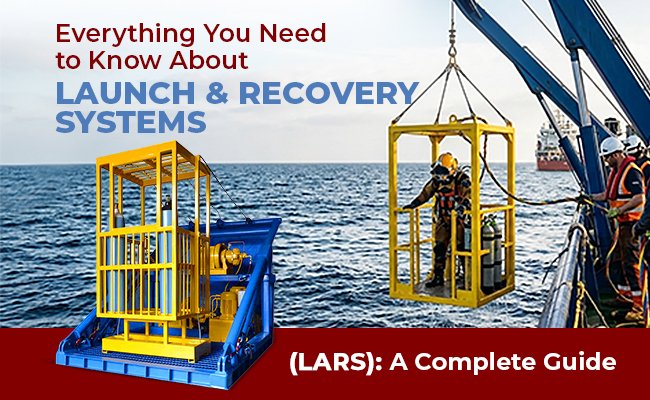
Launch & Recovery Systems (LARS) play a vital role in subsea, offshore, and marine operations. They are engineered to safely deploy and retrieve equipment, vehicles, and personnel in challenging environments, ensuring operational efficiency and safety. In offshore and subsea projects, these systems are indispensable for maintaining smooth and controlled operations.
A LARS launch and recovery system is specifically designed to provide stability and precision during deployment and retrieval. By compensating for vessel motion and controlling loads, it reduces the risk of accidents and protects both personnel and valuable underwater equipment. This makes it a critical component for safe and reliable offshore operations.
Several industries rely on LARS for their marine and subsea operations. In oil & gas, LARS supports offshore platforms by handling ROVs, subsea tools, and inspection equipment safely. The renewable energy sector uses these systems for installing and maintaining offshore wind turbines and underwater monitoring devices. Marine research depends on LARS to deploy scientific instruments, autonomous vehicles, and exploration sensors, while defense operations utilize LARS for underwater surveillance, reconnaissance, and specialized military missions.
For commercial and professional diving, the LARS diving system ensures divers are deployed and recovered safely, even in rough sea conditions. It provides precise handling of diving baskets, wetbells, and diving bells, improving operational efficiency while prioritizing diver safety. Modern LARS diving systems may also include monitoring and control features that further enhance safe underwater operations.
In short, Launch & Recovery Systems and their applications, including the LARS diving system, are essential for safe, efficient, and reliable subsea, offshore, and marine operations across multiple industries.
Launch & Recovery Systems (LARS) are designed for the safe and reliable deployment and recovery of equipment and personnel in offshore and subsea operations. Their main function is to ensure stability and control during lifting, lowering, or deployment, reducing risks to both personnel and equipment.
A LARS launch and recovery system is different from standard marine cranes because it includes features such as heave compensation, precise winching, and controlled handling. Standard cranes cannot manage sensitive underwater equipment or divers safely in rough sea conditions.
LARS enhances safety, operational efficiency, and reliability. For example, an ROV LARS allows precise deployment and retrieval of remotely operated vehicles, protecting equipment and improving mission success in subsea operations.
A LARS launch and recovery system works in three main stages: Deployment → Operation → Recovery. Equipment or divers are safely lowered, operated underwater, and then retrieved in a controlled manner.
Key components like the A-Frame, davit, winches, hydraulic power units, control panels, and heave compensation work together to ensure stability and precision during deployment and retrieval.
The LARS diving system allows safe deployment and recovery of divers, even in rough sea conditions, ensuring both diver safety and operational efficiency.
Automated Launch & Recovery Systems reduce manual errors, improve operational speed, and provide precise control over equipment and diver handling, making offshore operations safer and more efficient.
These systems are built for remotely operated vehicles (ROVs) and autonomous underwater vehicles (AUVs). They provide precise deployment, secure recovery, and stable operation during subsea inspections, surveys, and construction tasks.
Used in commercial diving, diving bells, and wetbell operations.
The LARS diving system ensures divers are deployed and retrieved safely, even in rough sea conditions. It includes features like diver baskets, controlled winches, and monitoring systems for improved safety and efficiency.
Compact, lightweight, and transportable systems that can be installed on smaller vessels or temporary offshore setups. These systems allow flexibility for short-term projects without sacrificing safety or control.
Designed for integration with vessel deck structures or moonpools. These systems are ideal for heavy-duty operations and can handle larger payloads, offering stability and precision for permanent offshore installations.
Tailored for underwater surveillance, deep-sea research, and specialized operations. These systems are engineered for precise handling, high reliability, and safe deployment of sensitive or classified equipment.
All these Launch & Recovery Systems are designed to ensure safe, reliable, and efficient operations, whether for commercial, scientific, or defense purposes.
The structural frame provides the main support for deployment and retrieval operations. It ensures stability and strength for handling heavy equipment or divers during offshore and subsea operations.
These winches allow precise lifting and lowering of payloads. Controlled winching reduces risks to equipment and personnel, providing smooth and reliable operation.
HPUs supply the necessary hydraulic power to operate winches, davits, and other system components, ensuring consistent and controlled movement.
Modern Launch & Recovery Systems come with control panels featuring monitoring and automation capabilities. Operators can manage deployment speed, tension, and positioning with accuracy.
Heave compensation stabilizes the payload by counteracting vessel movement in rough seas. This feature is critical for sensitive equipment and diver operations.
LARS include redundant brakes, interlocks, and emergency stop systems to protect both personnel and equipment during deployment and recovery.
For diving operations, specialized components like diver baskets, wetbells, and monitoring tools are integrated to ensure safe and controlled handling of divers. The LARS diving system provides stability, precise positioning, and enhanced safety during underwater tasks.
All these components work together to make LARS launch and recovery systems reliable, efficient, and safe for a wide range of offshore and subsea applications.
Subsea Robotics and ROV/AUV Deployment: Launch & Recovery Systems are widely used to deploy and retrieve remotely operated vehicles (ROVs) and autonomous underwater vehicles (AUVs). A LARS launch and recovery system ensures precise handling and safe operation of these underwater tools.
Offshore Oil & Gas: LARS supports inspections, maintenance, and subsea construction, allowing safe and efficient handling of heavy equipment and tools in harsh offshore environments.
Commercial Diving Operations: The LARS diving system enables controlled deployment and recovery of divers, including the use of diving baskets and wetbells, improving both safety and operational efficiency.
Marine Research and Exploration: Scientists use LARS to deploy exploration equipment, instruments, and autonomous vehicles for oceanographic research, ensuring delicate tools are handled safely.
Defence and Military Applications: Specialized Launch & Recovery Systems are used in underwater surveillance, reconnaissance, and defense operations, providing precise and reliable deployment of sensitive equipment.
These applications demonstrate how LARS launch and recovery systems and LARS diving systems are essential for safe, efficient, and reliable operations across multiple industries.
Safety: Launch & Recovery Systems reduce risks to personnel and equipment by providing controlled and stable deployment and retrieval. A LARS launch and recovery system ensures heavy equipment is handled safely, while the LARS diving system protects divers during underwater operations.
Operational Efficiency: These systems allow faster and precise deployment and retrieval of equipment and divers, saving time and improving overall offshore productivity.
Reliability: Designed for harsh marine environments, LARS deliver consistent performance, making them dependable for continuous subsea operations.
Versatility: LARS can handle a wide range of payloads, including ROVs, AUVs, and diving baskets, supporting multiple offshore and subsea applications.
Compliance: Built to meet industry standards such as IMCA and DNV, LARS ensure safe, regulated, and professional offshore operations.
Factors: Selecting the right Launch & Recovery System depends on several key factors. Consider the vessel size, deck space, payload capacity, water depth, and operation type to ensure the system fits your specific offshore or subsea requirements.
Off-the-Shelf vs. Custom Systems: Operators can choose between standard off-the-shelf systems and custom-designed solutions. While off-the-shelf LARS are quick to deploy and cost-effective, a LARS launch and recovery system customized for your vessel and operations can provide enhanced safety, efficiency, and precision.
Certification and Maintenance: It is important to ensure the system meets industry standards and safety regulations. Regular maintenance and certification guarantee reliability and minimize operational risks.
Diving Operations: For professional diving tasks, the LARS diving system should be considered. It includes components like diver baskets, wetbells, and monitoring systems to ensure divers are deployed and retrieved safely, even in challenging sea conditions.
Choosing the right Launch & Recovery System ensures that offshore and subsea operations are safe, efficient, and reliable.
International Standards: Launch & Recovery Systems are designed to meet standards from organizations like IMCA, DNV, and other international regulatory bodies. Compliance ensures safety, reliability, and quality in offshore and subsea operations.
Inspections and Training: Regular inspections, proper maintenance, and operator training are essential to prevent accidents and ensure smooth operation of a LARS launch and recovery system. Redundant safety systems further reduce risk during critical operations.
Diving Operations: The LARS diving system includes specific safety measures such as controlled diver baskets, wetbells, and monitoring systems to protect divers during deployment and retrieval, even in rough seas.
Adhering to safety standards ensures that both equipment and personnel are protected, making LARS operations secure and reliable.
The future of Launch & Recovery Systems is driven by automation, advanced materials, and smarter offshore operations. Integration of automation and AI allows real-time monitoring and optimization, making deployment and retrieval faster, safer, and more precise.
Enhanced heave compensation systems are improving stability in extreme sea conditions, protecting both sensitive equipment and personnel during subsea operations. At the same time, new lightweight, strong, and modular materials make LARS easier to transport, install, and adapt to different vessel configurations.
Remote handling and robotic subsea operations are also shaping the future of LARS. These technologies reduce human risk while increasing operational precision. Even the LARS diving system benefits from automation and remote control, enhancing diver safety during complex offshore tasks.
Overall, the evolution of LARS launch and recovery systems ensures safer, more efficient, and versatile solutions for modern offshore and subsea operations.
Expertise in LARS Solutions: J. K. Subsea Engineering Pvt. Ltd., based in Mumbai, specializes in manufacturing and supplying LARS launch and recovery systems for offshore and subsea operations. Their systems are designed for safety, reliability, and efficient performance.
Custom Solutions: They offer tailored solutions for ROVs, diver operations, and other subsea equipment, including the LARS diving system, ensuring each system fits project-specific requirements.
Proven Reliability: Their Launch & Recovery Systems are engineered to perform consistently in harsh marine conditions, providing dependable operations for every deployment.
Post-Sale Support: The company provides comprehensive maintenance and support services to ensure long-term reliability and operational efficiency.
Compliance with Standards: All systems adhere to international standards and safety regulations, giving clients confidence in professional offshore operations.
Client Success Stories: Case studies from various projects demonstrate the effectiveness of their LARS launch and recovery systems and LARS diving systems, reflecting their expertise in manufacturing and supply in Mumbai.
Launch & Recovery Systems (LARS) are essential for safe, efficient, and reliable offshore and subsea operations. From their definition and key components to the various types, applications, and benefits, LARS ensure precise deployment and retrieval of equipment and divers, even in harsh marine conditions.
The advantages of a LARS launch and recovery system include enhanced safety, operational efficiency, versatility, and compliance with industry standards. The LARS diving system further strengthens diver safety and control during underwater operations. With advancements in automation, lightweight materials, and remote handling, the future of LARS promises even greater efficiency and reliability.
For organizations seeking tailored solutions, J. K. Subsea Engineering Pvt. Ltd. in Mumbai offers expert manufacturing and supply of LARS launch and recovery systems and LARS diving systems, backed by experience, compliance, and proven performance.
Contact J. K. Subsea Engineering today to explore custom Launch & Recovery Systems solutions designed to meet your offshore and subsea project needs.
LARS launch and recovery systems are designed for safe deployment and retrieval of underwater equipment and divers with precise control and heave compensation. Standard cranes do not provide these features.
Most Launch & Recovery Systems can operate at several hundred meters, with custom systems capable of deeper subsea operations.
Costs vary depending on type, payload, customization, and features. LARS diving systems are usually higher due to specialized safety components.
Offshore oil & gas, renewable energy, marine research, defense, and commercial diving industries benefit from Launch & Recovery Systems.
Maintenance should follow manufacturer guidelines, including inspections, lubrication, and safety checks for both LARS launch and recovery systems and LARS diving systems.
Types include ROV/AUV LARS, Diver LARS or LARS diving systems, portable/modular systems, custom gantry LARS, and specialized military or research LARS.
Yes, Launch & Recovery Systems and LARS diving systems are designed with heave compensation and stabilization to operate safely even in rough seas.
Modern LARS launch and recovery systems include automation features for monitoring, precise control, and safer deployment and retrieval of equipment and divers.
Safety features include controlled diver baskets, wetbells, monitoring systems, and redundant braking to protect divers during deployment and recovery.
J. K. Subsea Engineering Pvt. Ltd., Mumbai, specializes in manufacturing and supplying LARS launch and recovery systems and LARS diving systems for offshore and subsea operations.
Fill in your details below to instantly download the product datasheet.